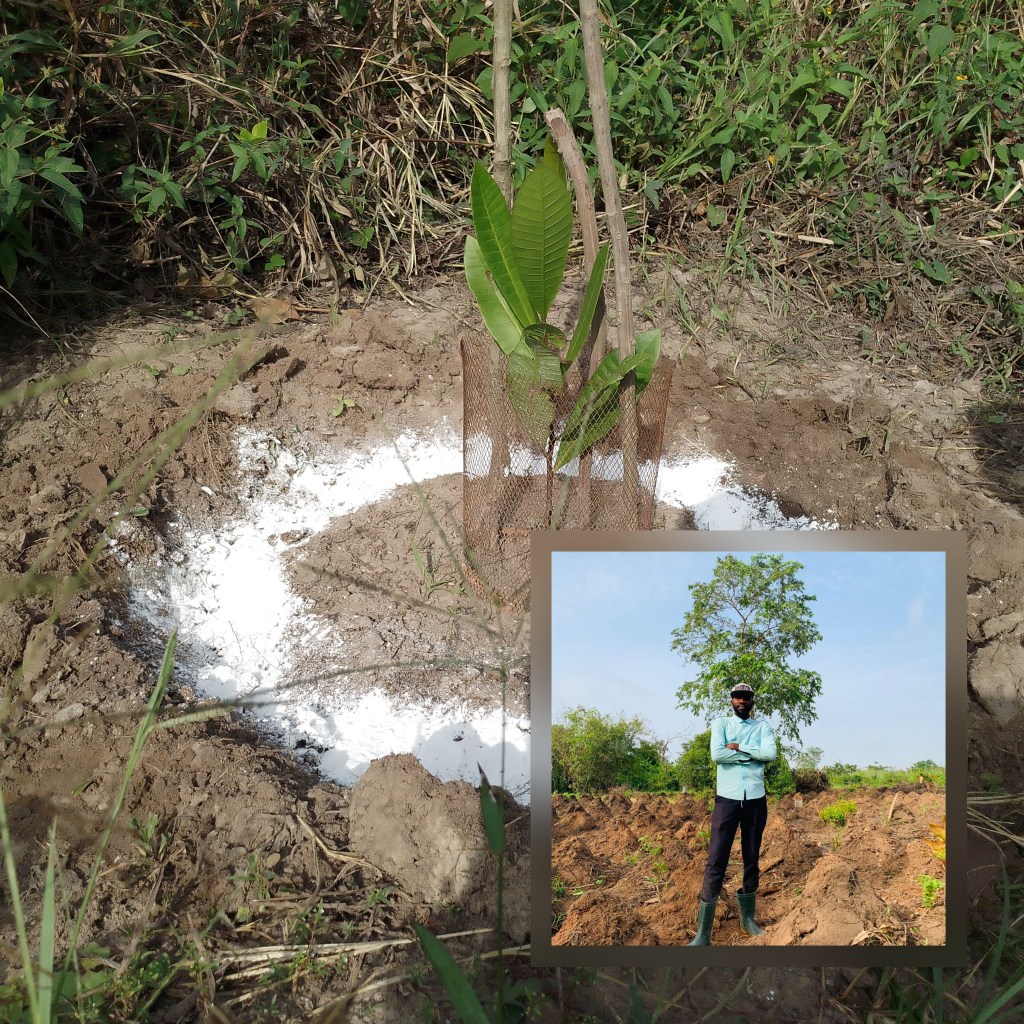
-Abeokuta, Nigeria.
In a recent discussion with farmers, expert agronomist Paschal Nnaemeka provided valuable insights into using lime to manage acidic soil, particularly on farmlands with a pH of 3.5. He explained how lime can transform the soil environment and improve crop growth, especially for cashew and plantain.
“Lime works by reacting with the excess hydrogen ions in the soil, which are the main cause of acidity,” Nnaemeka said. “This reaction releases calcium ions that reduce acidity and improve soil structure while also producing carbon dioxide and water as byproducts.”
To help farmers save costs, Nnaemeka suggested the ring method of applying lime around the base of each plant. He pointed out that this method focuses the lime’s benefits near the root zones, where plants can quickly access nutrients. Over time, as the lime dissolves with soil moisture, its effects spread, gradually improving the surrounding soil.
He also addressed a major issue for farmers dealing with acidic soils: aluminum toxicity. “In very acidic soils, aluminum becomes highly toxic to plant roots, but lime neutralizes it by turning it into an insoluble form,” he explained. “This allows roots to grow properly and absorb nutrients like phosphorus and magnesium that are usually locked away in acidic conditions.”
However, Nnaemeka noted that while the ring method is cost-effective, it may not correct soil acidity uniformly across the entire field. He advised farmers to regularly check their soil’s pH and consider broader lime applications in the future for consistent results.
“For lime to work effectively, the soil needs adequate moisture,” he added. “And remember, it takes time for lime to fully react with the soil, so patience is key.”
 Paschal Farms International.
Leave a comment