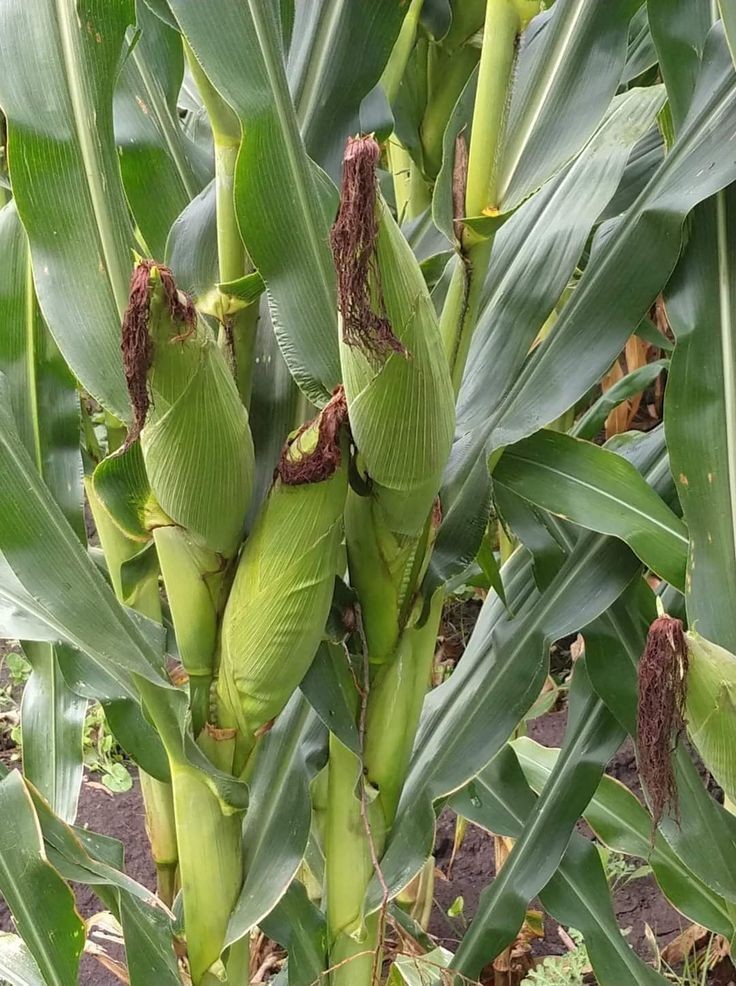
– Illewo, Nigeria.
Maize plants can produce more than one cob, and this ability is closely linked to their growth stages and the pollination process. In the vegetative stage, the plants work on establishing strong roots and growing leaves, which are essential for capturing sunlight and photosynthesis.
Once they reach the reproductive stage, tasseling begins, and the male flowers release pollen. Pollination happens when this pollen lands on the silks of the female flowers, with each silk representing a potential kernel.
For a plant to produce multiple ears, both primary and secondary ears need to form, which largely depends on environmental conditions like light, nutrients, and water availability. If the primary ear develops well, there’s a better chance for secondary ears to form, especially under favorable conditions.
Successful pollination relies on the timing of pollen release and when the silks emerge, as well as environmental factors such as humidity and temperature. Resources during kernel formation also play a crucial role in determining ear size and the number of kernels.
By managing planting density, ensuring good nutrition, and maintaining adequate water supply, farmers can boost their maize yields and increase the chances of getting multiple cobs from each plant.
 Paschal Farms International.
Leave a comment