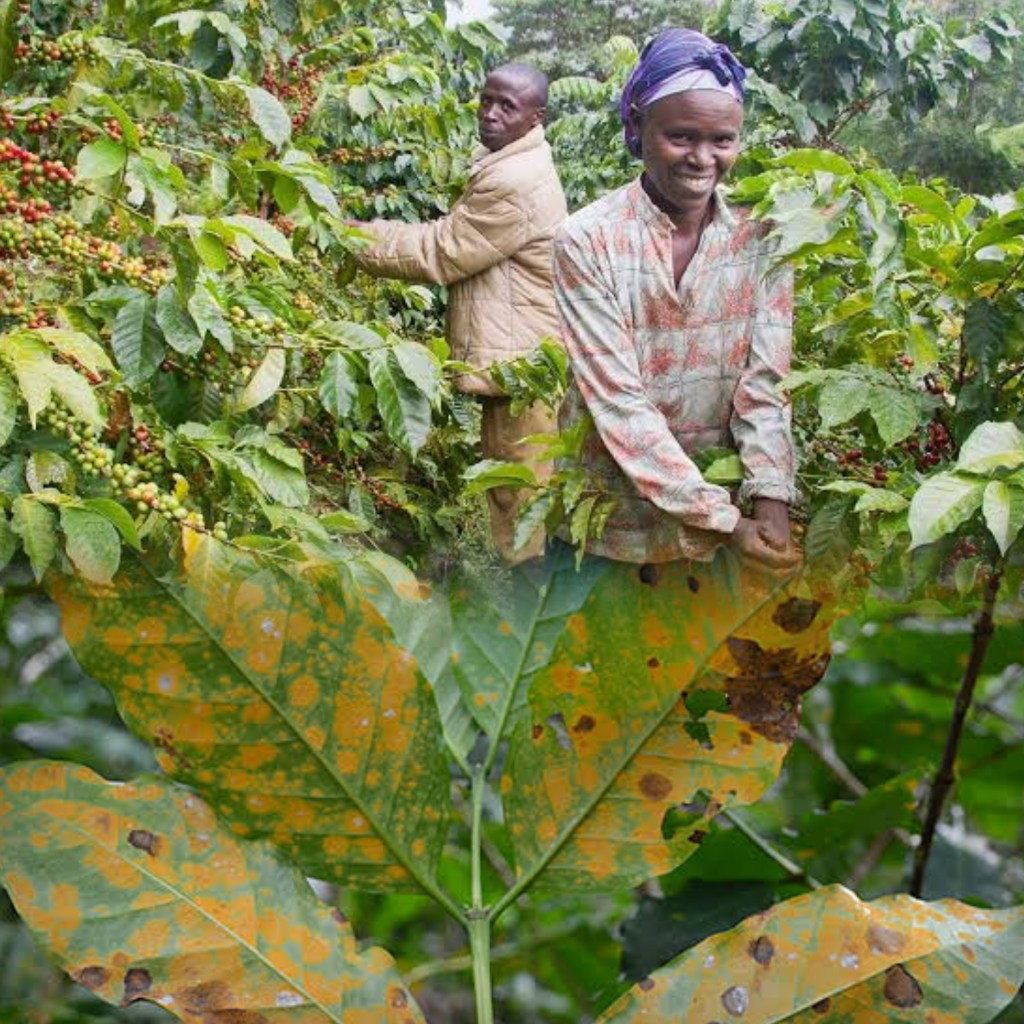
Coffee rust, caused by the fungus Hemileia vastatrix, poses a serious threat to coffee production. The disease manifests as yellow-orange pustules on coffee leaves, which eventually lead to leaf drop. This loss of foliage impairs the plant’s ability to photosynthesize, significantly reducing its vigor and yield.
The challenge of coffee rust is compounded by rising temperatures. Heat accelerates the fungal lifecycle, leading to faster and more extensive outbreaks. Additionally, higher temperatures stress the coffee plants, making them more vulnerable to infection.
To combat coffee rust effectively, a combination of strategies is crucial. Fungicides can be used to manage the disease by inhibiting fungal growth and preventing spore spread. Proper application of fungicides can mitigate the severity of infections and limit the spread of the disease.
In addition to chemical controls, planting rust-resistant coffee varieties offers a long-term solution. These varieties are bred to either resist infection or reduce the impact of the disease, thus maintaining yields and reducing reliance on chemical treatments.
By integrating fungicides with rust-resistant coffee varieties, farmers can address the immediate and long-term challenges posed by coffee rust, ensuring more sustainable and resilient coffee production.
Recent posts
Quote of the week
"People ask me what I do in the winter when there's no baseball. I'll tell you what I do. I stare out the window and wait for spring."
~ Rogers Hornsby
Paschal Farms International.
About
A passionate baseball fan blog celebrating America's favorite pastime.
 Paschal Farms International.
Leave a comment